Summary
Armored transportation is a specialized logistics service designed to move cash, valuables, financial assets, and other sensitive goods under controlled security arrangements. Its cost is influenced by vehicle requirements, trained personnel, route complexity, transportation frequency, insurance arrangements, and operational expenses. Understanding these pricing components helps businesses select appropriate protection while managing their transportation budgets. UNIVAL Logistics explains how armored transport pricing works and what businesses should consider before requesting a service quotation.
Overview
Quick Answer: Armored transport service can cost approximately $75 to $200 for a one-time service, depending on the provider, location, transportation requirements, and security arrangements. Recurring commercial contracts may use per-pickup or monthly pricing. Businesses should request customized quotations because there is no universal national rate.
What Are Armored Transport Services?
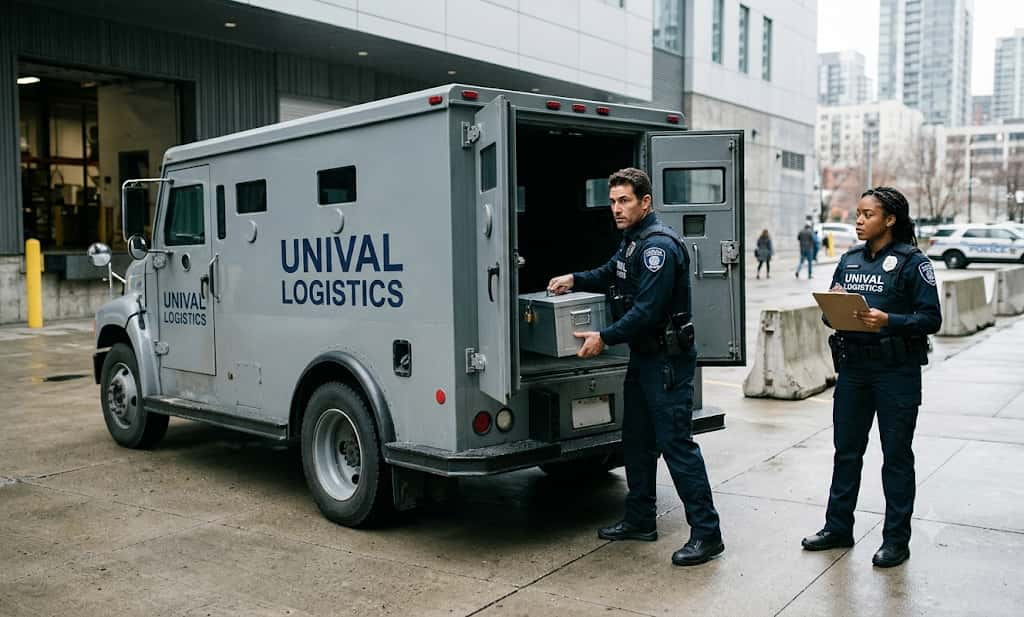
Armored transportation is a specialized logistics solution for moving cash, valuables, financial assets, and other sensitive materials using security-equipped vehicles and trained personnel.
Unlike standard courier services, armored transportation involves additional security procedures, controlled custody transfers, specialized vehicles, and insurance or liability arrangements.
Businesses commonly use these services for cash collections, bank deposits, ATM replenishment, retail cash management, and the transportation of valuable commercial assets.
The service is particularly relevant to organizations that handle substantial cash volumes or require documented and secure transfers between business locations.
Which Businesses Need Armored Transportation?
Armored transportation can support different industries depending on their security and operational requirements.
Retail Stores and Supermarkets: Businesses collecting daily cash payments may require scheduled cash pickups and secure bank deposits.
Banks and Financial Institutions: Financial organizations use specialized transportation arrangements for cash, currency, and other financial assets.
Restaurants and Hospitality Businesses: Restaurants, hotels, and entertainment venues may need regular collections to reduce the amount of cash stored at their premises.
ATM Operators: ATM businesses may require cash replenishment, cash collection, and related transportation services.
Jewelry and Luxury Retailers: Businesses handling valuable merchandise may need specialized secure transportation arrangements.
Government and Commercial Organizations: Certain organizations require documented transportation of deposits, financial materials, and sensitive assets.
How Armored Transport Pricing Works
Armored transportation providers generally use customized pricing rather than one standard nationwide rate.
For example, Brink's identifies pickup frequency, the number of business locations, average cash volume per stop, and geographic coverage as important pricing considerations.
Brink's US+1
Depending on the provider, businesses may receive pricing through:
Per-pickup charges.
Monthly service agreements.
Annual commercial contracts.
Special or emergency transportation fees.
Additional cash management and processing charges.
Loomis also provides a cost calculator that uses an illustrative average of $20 per armored car event to help businesses assess the potential financial benefits of outsourcing cash transportation. This is a calculation assumption, not a guaranteed market quotation.
Loomis US
Complete Armored Transport Service Cost Breakdown
Understanding the different pricing components helps businesses estimate their transportation budgets more accurately.
1. One-Time Armored Transport Service
For businesses that need occasional collections or deliveries, providers may offer individual service arrangements.
One-time armored carrier service: $75 to $200 per service, based on a published industry pricing guide. Actual charges depend on location, cash volume, service requirements, and availability.
MPS
Additional transportation requirements: May increase the total charge depending on the requested service.
Special or emergency service: May involve additional fees for urgent scheduling or nonstandard operating hours.
One-time service is generally more suitable for occasional requirements than for businesses needing frequent collections.
2. Scheduled Armored Cash Pickup
Businesses with regular cash collections may benefit from recurring service agreements.
Per-pickup pricing: Public procurement examples have shown approximately $18.50 to $55.93 per pickup for specified bulk-service arrangements. These historical public-sector bid rates should not be treated as standard private-business prices.
GovTribe
Monthly scheduled collection: A Delaware public contract listed monthly location charges of $329.55 for a specified three-day weekly pickup arrangement at one location. This is a contract-specific benchmark, not a current national market rate.
Bid Board
Additional pickup: Extra collections may be charged separately according to the contract.
The final price depends on pickup frequency, location, transportation requirements, and service conditions.
3. Monthly Armored Transport Contracts
Businesses that require regular transportation can request monthly or annual service agreements.
Monthly pricing may include scheduled collections, secure transportation, custody documentation, and other agreed services.
The total monthly expense depends on the number of service visits, locations, average cash volume, and any additional cash management requirements.
4. Additional Service and Operational Expenses
Apart from the main transportation charge, some providers may apply additional fees for specialized services.
Emergency pickup: Additional charges may apply to urgent or unscheduled collections.
After-hours service: Evening, weekend, and holiday requirements may affect pricing.
Cash processing: Counting, verification, deposit preparation, and related services may be billed separately.
ATM replenishment: Cash delivery and ATM servicing can involve separate service charges.
Additional insurance or liability limits: Higher transportation values may require different contractual coverage arrangements.
Waiting time: Extended onsite service may generate additional charges under some agreements.
Important Disclaimer
All prices and cost examples provided in this article are baseline estimates and published pricing benchmarks for general budgeting purposes only. Actual armored transport service prices are subject to market fluctuations, supplier changes, location-specific operating conditions, security requirements, vehicle availability, contract terms, and variable logistics fees. Historical public procurement rates and illustrative industry estimates are not guaranteed quotations. Insurance limits, additional services, and special transportation requirements may also affect the final price. For the latest and most accurate prices, please contact UNIVAL Logistics for professional guidance and a customized service estimate.
Major Factors That Affect Armored Transport Pricing
Several operational and security-related factors determine the final transportation cost. Understanding these factors helps businesses request accurate quotations and avoid unexpected expenses.
1. Transportation Distance and Route Complexity
Distance is one of the main considerations when calculating transportation expenses.
Short-distance collections between a retail location and a nearby banking facility may require fewer resources than long-distance transportation between multiple cities.
Route complexity, traffic conditions, travel time, and geographic coverage can also affect the final quotation.
2. Number of Security Personnel
Armored transportation requires trained personnel to manage secure handling and transportation procedures.
Depending on the service requirements, providers may assign different staffing arrangements. The number of personnel, training requirements, and operational responsibilities can influence service costs.
3. Type of Armored Vehicle
Different transportation requirements may require different vehicle configurations.
For example, routine commercial cash collections may use standard armored vehicles, while specialized valuables transportation may require additional security features or equipment.
Vehicle availability, operating expenses, maintenance, and fuel consumption can contribute to the overall service price.
4. Value and Type of Assets
The type and value of transported assets can influence insurance arrangements, liability limits, and security requirements.
Cash transportation, jewelry, precious metals, financial documents, and other valuable merchandise may require different handling procedures.
Businesses should disclose their transportation requirements accurately when requesting quotations.
5. Pickup Frequency and Service Schedule
A business requiring daily cash collections may receive a different pricing structure from one requesting weekly transportation.
Regular service agreements can provide more predictable budgeting, while occasional collections may involve higher individual service charges.
6. Insurance and Liability Requirements
Businesses should review the insurance and liability arrangements included in their transportation agreements.
Important considerations include:
Maximum liability limits.
Covered transportation risks.
Exclusions and deductibles.
Custody transfer documentation.
Responsibilities during collection and delivery.
Higher coverage requirements may affect the final contract price.
Armored Transport Services Across Major US Business Markets
Transportation costs can vary between metropolitan areas because of labor expenses, operating conditions, route requirements, and service availability.
Businesses should evaluate local provider coverage before selecting a transportation agreement.
Los Angeles
Los Angeles businesses may require armored transportation for retail cash collections, financial deposits, and high-value commercial assets. Traffic conditions and service distances can influence scheduling and operational expenses.
New York
New York businesses often require scheduled collections across retail districts, commercial buildings, financial locations, and multiple business premises. Access requirements and operating schedules should be considered when requesting quotations.
Miami
Miami businesses handling retail revenue, hospitality deposits, and valuable merchandise may benefit from secure transportation arrangements. Route coverage and transportation schedules can influence pricing.
Chicago
Retailers, financial institutions, and commercial organizations in Chicago may require recurring cash collection and secure deposit transportation. Businesses should evaluate pickup frequency and service availability.
Dallas
Dallas businesses may need transportation between retail locations, banking facilities, commercial premises, and ATM locations. Geographic coverage and travel distances can influence service costs.
Houston
Houston businesses should consider transportation distances, collection frequency, and scheduling requirements when evaluating armored carrier services.
Philadelphia
Retail businesses, financial organizations, and commercial operators in Philadelphia may benefit from scheduled cash collections and documented transportation procedures.
Atlanta
Businesses in Atlanta may require secure transportation for retail deposits, financial assets, and commercial valuables. Service availability and route requirements should be included in pricing discussions.
Las Vegas
Hotels, casinos, entertainment venues, and retail businesses may have specialized cash transportation requirements. Collection frequency, cash volume, and service schedules are important pricing considerations.
San Francisco
San Francisco businesses may need secure transportation for retail deposits, financial materials, and valuable commercial merchandise. Urban access and operating conditions can affect service arrangements.
Boston
Financial institutions, retail stores, and commercial organizations in Boston may require scheduled cash collections and secure transportation between business locations.
Newark and Northern New Jersey
Businesses in Newark and Northern New Jersey may need armored transportation for retail collections, commercial deposits, and valuable assets. Route coverage and access to banking facilities should be evaluated when selecting a provider.
How to Choose the Right Armored Transportation Provider
Selecting a transportation provider requires evaluating service quality, security arrangements, pricing transparency, and operational reliability.
Review Licensing and Insurance
Confirm that the provider maintains the licenses, registrations, insurance, and other authorizations applicable to its operations and transportation routes.
Businesses should also request information about contractual liability and coverage arrangements.
Evaluate Security Procedures
Ask about personnel screening, training, vehicle security, custody documentation, and incident reporting procedures.
A professional provider should clearly explain how assets are handled from collection through final delivery.
Compare Service Agreements
Request quotations from multiple providers using the same service requirements.
Compare the following:
Base transportation charges.
Scheduled pickup frequency.
Additional service fees.
Insurance and liability provisions.
Contract duration and cancellation terms.
A transparent quotation makes it easier to evaluate the actual cost of transportation.
Check Service Reliability
Reliable collections and deliveries are important for businesses managing daily cash operations.
Evaluate the provider's service coverage, communication procedures, documentation standards, and ability to accommodate operational changes.
Practical Ways to Manage Armored Transportation Costs
Businesses can improve transportation budgeting by reviewing their collection requirements and negotiating appropriate service arrangements.
Establish an Appropriate Pickup Schedule
Evaluate how frequently your business genuinely needs collections.
A suitable schedule should balance cash management requirements, operational expenses, and the amount of cash held at each location.
Consolidate Transportation Requirements
Businesses operating multiple locations may benefit from discussing consolidated service agreements.
Combining compatible collection requirements can simplify scheduling and potentially improve commercial pricing.
Review Additional Charges
Ask providers to explain fuel adjustments, emergency collection fees, waiting-time charges, special handling expenses, and other possible surcharges.
Understanding these costs before signing an agreement helps prevent billing surprises.
Compare the Total Cost of In-House Cash Handling
Armored transportation should also be evaluated against the expenses associated with managing cash internally.
Internal transportation can involve employee time, vehicle expenses, fuel, administrative work, and additional security responsibilities.
Loomis provides a business calculator that illustrates how cash-handling labor and reconciliation activities can contribute to a company's overall costs.
For some businesses, outsourcing can provide operational benefits beyond the direct transportation expense.
How UNIVAL Logistics Supports Secure Transportation Planning
Businesses handling cash and valuable assets need transportation arrangements that align with their operational requirements and security expectations.
UNIVAL Logistics understands the importance of evaluating transportation costs, service requirements, route considerations, and asset protection.
A suitable transportation plan should consider the type of assets being moved, collection frequency, delivery destinations, security arrangements, insurance requirements, and documentation procedures.
For organizations comparing armored transport services, understanding these factors can make the quotation process more effective and help businesses evaluate the total cost of secure transportation.
UNIVAL Logistics encourages businesses to assess their requirements carefully and seek professional guidance when comparing logistics and transportation arrangements.
Building a Reliable Transportation Budget
An effective transportation budget should include the primary service charge and any additional operational expenses.
Businesses should review their monthly transportation frequency, number of collection locations, average asset values, and special service requirements.
Regularly reviewing service agreements can also help identify unnecessary expenses and opportunities to improve operational efficiency.
The objective is to establish a transportation arrangement that supports business security, predictable expenses, and reliable logistics operations.
Key Takeaways
Armored transportation pricing depends on distance, service frequency, vehicle requirements, and security arrangements.
One-time services may cost approximately $75 to $200 based on published industry estimates.
Recurring commercial contracts may use per-pickup, monthly, or annual pricing.
Additional expenses can include cash processing, emergency collections, waiting time, and specialized insurance requirements.
Businesses should compare complete quotations rather than focusing exclusively on the base service charge.
Licensing, insurance, security procedures, and custody documentation are important provider selection considerations.
Reviewing internal cash-handling expenses can help determine whether outsourced transportation offers better operational value.
UNIVAL Logistics encourages businesses to evaluate their transportation requirements before selecting a secure logistics arrangement.
Frequently Asked Questions
1. How much does armored transport service cost?
Armored transportation can cost approximately $75 to $200 for a one-time service based on a published industry pricing guide. Recurring contracts may use different per-pickup or monthly rates depending on location, transportation requirements, and service frequency.
2. Is armored transportation charged per pickup or monthly?
Both pricing structures are available. Some providers charge individually for each collection, while others offer monthly or annual agreements for businesses requiring regular transportation.
3. What factors increase armored transport costs?
Major factors include transportation distance, pickup frequency, security personnel, vehicle requirements, asset value, insurance limits, and additional services such as cash processing.
4. Is armored transportation available for small businesses?
Yes. Small businesses, including retailers, restaurants, and independent commercial operators, may qualify for scheduled or occasional transportation services depending on provider availability and minimum service requirements.
5. Does armored transport include insurance?
Coverage and liability arrangements depend on the transportation agreement. Businesses should confirm the applicable coverage limits, exclusions, deductibles, and responsibilities before signing a contract.
6. Is monthly armored transportation cheaper than individual pickups?
Monthly agreements may offer more predictable expenses and potentially better pricing for regular transportation requirements. However, the actual savings depend on service frequency, contract terms, and additional charges.
7. Can armored transportation providers collect cash from multiple business locations?
Many providers offer multi-location collection services. Pricing generally depends on the number of locations, collection schedules, geographic coverage, and operational requirements.
8. What is the difference between armored transportation and regular courier services?
Regular courier services generally handle standard parcels and commercial deliveries. Armored transportation uses specialized security arrangements and trained personnel for eligible cash, valuables, and sensitive assets.
9. How can businesses reduce armored transportation expenses?
Businesses can review pickup frequency, consolidate compatible collection requirements, compare provider quotations, negotiate recurring contracts, and understand additional service charges.
10. How do I request an armored transportation quotation?
Prepare information about your collection locations, transportation frequency, asset category, approximate value, delivery requirements, and preferred schedule. Providers can use these details to prepare a customized quotation.
Final Recommendation
Understanding armored transport pricing helps businesses make informed decisions about protecting cash, valuable merchandise, and financial assets. The best transportation arrangement is not necessarily the cheapest one. It should provide appropriate security, transparent pricing, reliable service, and suitable contractual protection.
By comparing service agreements, evaluating operational requirements, and reviewing additional charges, businesses can develop a more effective transportation budget.
Choose smarter transportation planning and prioritize secure logistics with UNIVAL Logistics.